Preserving the Architectural Precision of Tadao Ando
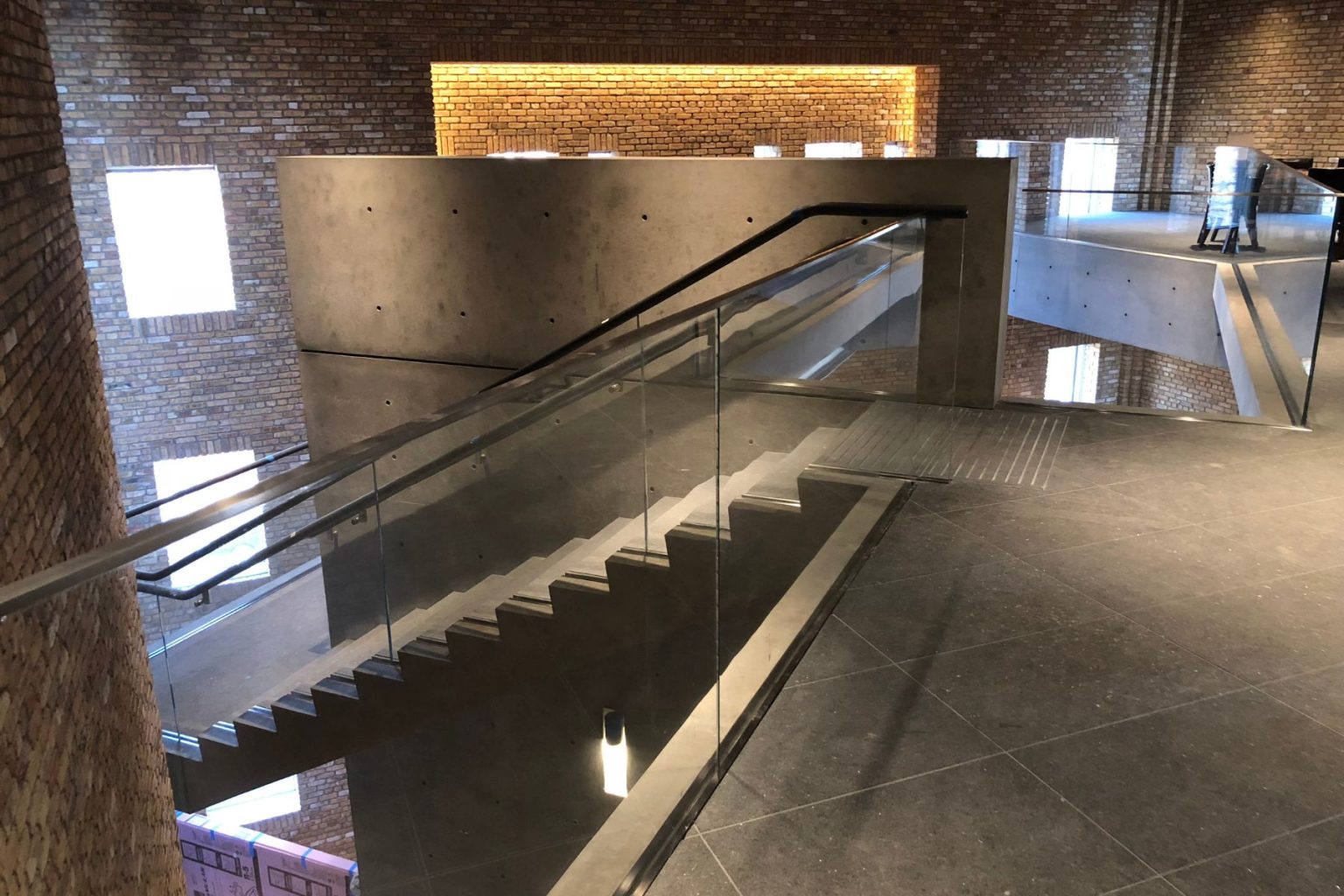
Wrightwood 659, designed by Japanese architect Tadao Ando, is a striking
example of architectural purity. Located in Chicago’s Lincoln Park neighborhood,
it was conceived as a gallery and cultural space within the existing shell of a
1920s apartment building. The new structure inserted into that historic envelope
is made almost entirely of cast-in-place concrete, with no decorative finishes,
cladding systems, or concealing layers. Concrete is the material, the structure,
the finish, and the form.
This approach is both visually powerful and materially unforgiving. Concrete,
unlike finished drywall or veneered cladding, exposes everything: from how it
was mixed, poured, and cured, to the temperature of the day and the condition of
the formwork. Even slight imperfections—such as a shadow line misaligned by
millimeters or a pinhole void near an edge—can register as noise in a building
that otherwise operates in silence. At Wrightwood 659, where tie-rod holes form
a strict grid and light moves across the surface with sharp contrast, any
disruption to the material order becomes immediately visible.
Concrete is a material with memory. Every stage of its making leaves a trace: the
temperature of the mix, the speed of placement, the consistency of compaction,
the sealing of the forms. Even when poured by skilled contractors with full
intention, cast-in-place concrete does not offer total predictability. It is influenced
by humidity, curing patterns, aggregate behavior, and form release chemistry.
And while that unpredictability is part of what makes concrete alive as a material,
in a Tadao Ando building—where geometry is meditative and every surface is
choreographed—it creates a challenge.

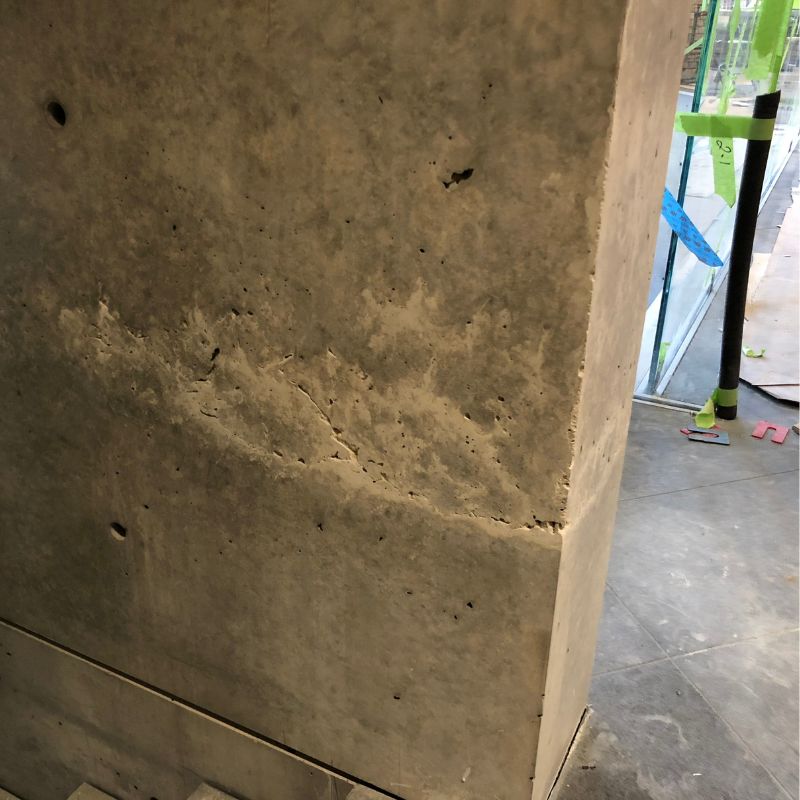
After the initial construction of Wrightwood 659, a number of surface irregularities
became evident during final inspection and occupancy. These included small
areas of surface spalling near formwork seams, air voids from incomplete
consolidation, curing discolorations that broke the uniform tone of wall planes,
and minor cracking or texture inconsistencies that only revealed themselves
under specific gallery lighting. These were not unusual in the context of concrete
construction. In another building, they might have gone unnoticed or been
considered part of the material's expression.
But here, they mattered.
Ando’s architecture relies not just on minimalism, but on exactitude. His buildings
are systems of proportion and control. The formwork grid is not incidental—it is
aligned precisely from wall to ceiling, from floor to soffit. Tie-rod holes sit in a
repeating matrix, and the concrete’s surface acts as a canvas for light and
shadow. When those rhythms are broken—whether by an unintentional texture
shift or a tonal mismatch—the architecture itself is affected. The building loses its
calm.
At Wrightwood 659, these disruptions did not reflect construction failure. They
reflected the gap between what concrete naturally does and what Ando’s
architecture demands it to do. Bridging that gap is not something achieved with
typical patchwork or cosmetic overlays. It requires material literacy, aesthetic
judgment, and the ability to integrate new work into an already complex visual
field without announcing the intervention.
Marion Restoration’s role was not to correct construction, but to extend the
architectural intent—to restore continuity where the material deviated from its
intended role. The first step in this work was a comprehensive surface survey,
conducted in coordination with the client team and owner’s representative. Areas
of concern were reviewed in context: not only for size or severity, but for their
visibility in the architectural sequence, their position relative to natural light,
and their alignment with architectural features like stairs, reveals, and
fenestrations.
This approach allowed us to assess what mattered most—not just what was
flawed, but what interrupted. For example, a discoloration high on a wall in a
naturally lit stairwell posed more of a problem than a similar mark in a low-traffic
corner. Similarly, small voids that broke a clean edge where concrete volumes
intersected were given greater weight because they disrupted one of the most
precise visual conditions in the building: the shadow line.
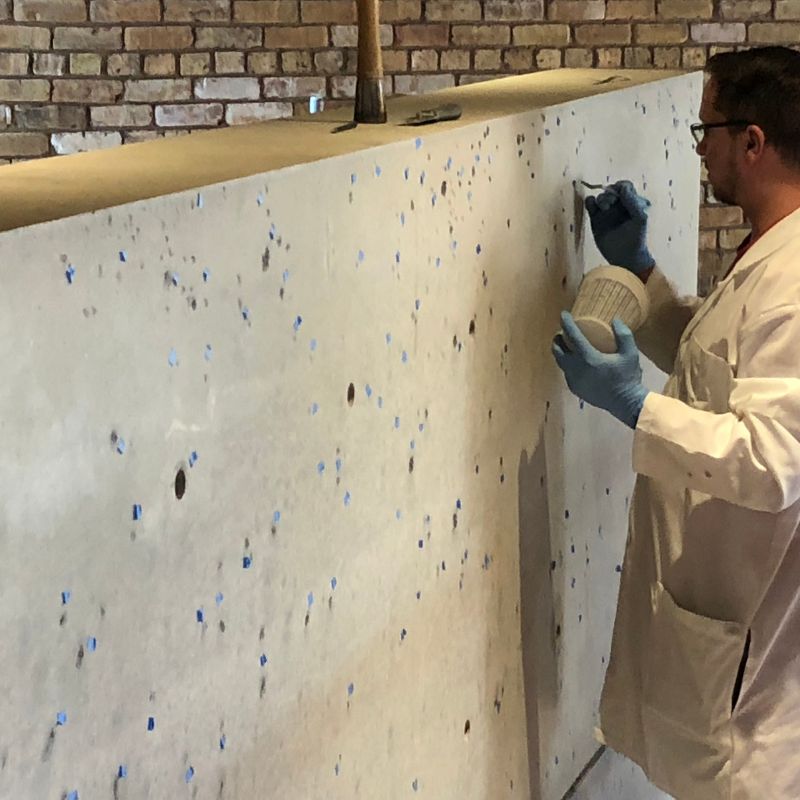
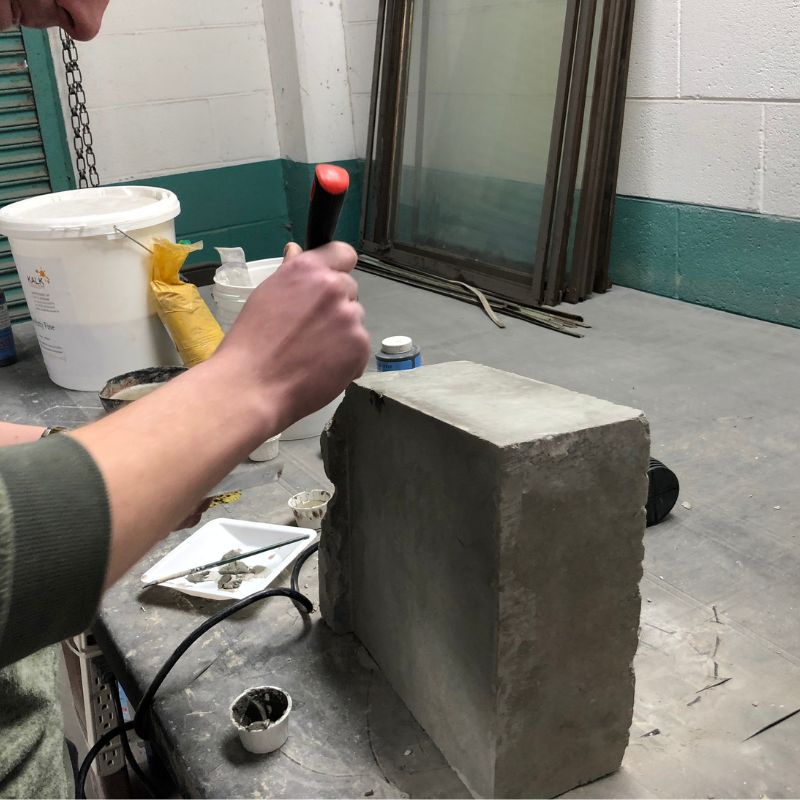
To address these issues, we selected a conservation-grade patching mortar
formulated to match the building’s concrete not just in color, but in texture and
porosity. Surface preparation was done with care. We avoided high-impact
mechanical tools that could cause micro-vibration damage or haloing. Instead,
cleaning and profiling were performed with hand tools and light abrasion to
preserve the integrity of adjacent surfaces.
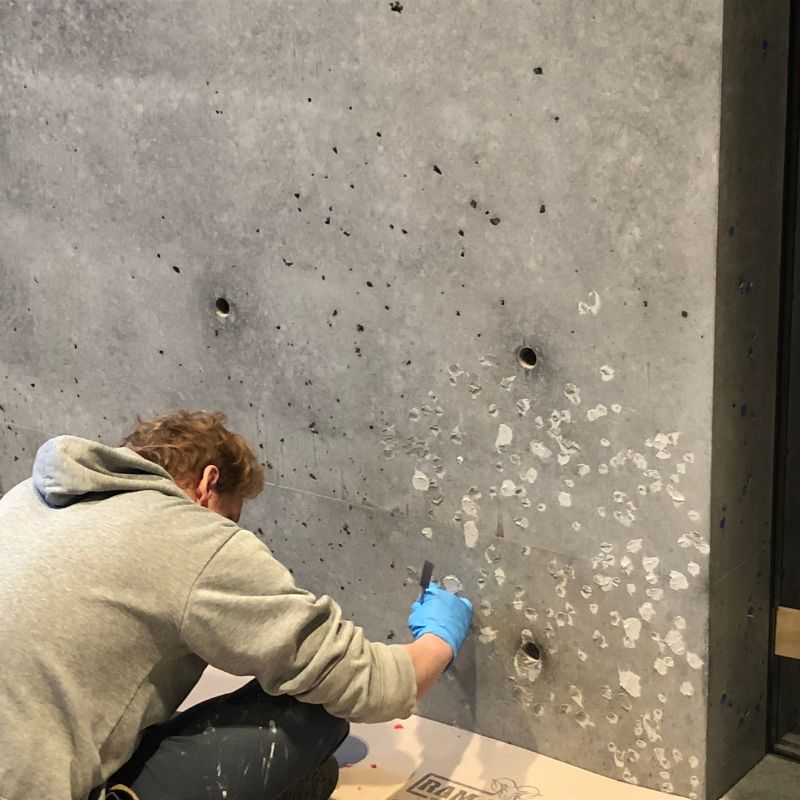
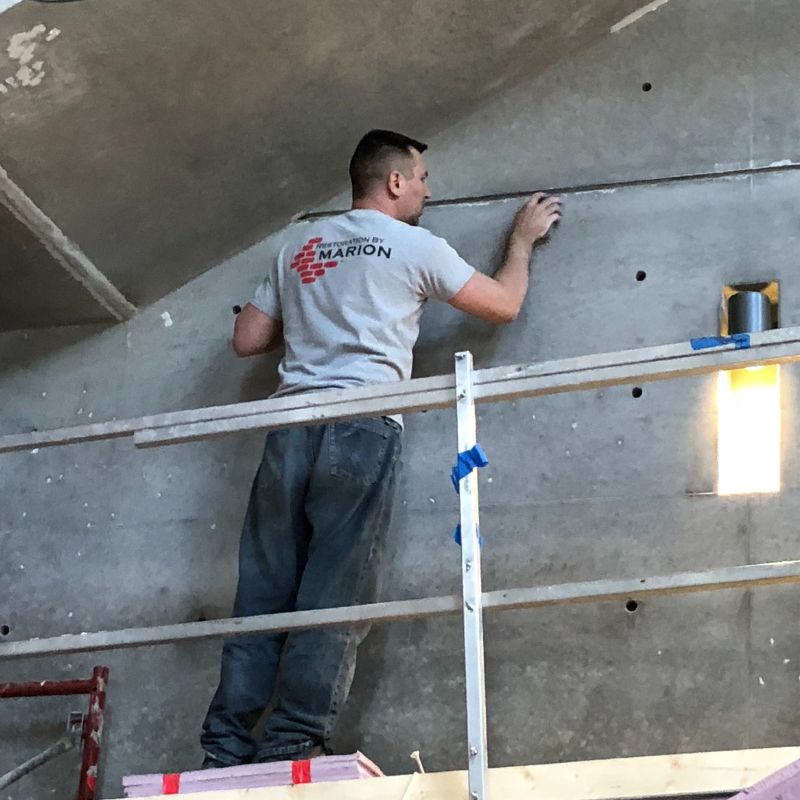
Application of the repair material required finesse. Each patch was hand-applied
using sculpting tools and specialty trowels designed to taper edges and control
feathering. Where deeper fill was required, the material was built up in controlled
lifts to avoid shrinkage cracking and ensure proper cure. This was followed by a
custom stain application, performed by eye under shifting light conditions, and
adjusted to blend precisely with the surrounding surface. In many cases, this
blending took place over multiple passes—layering thin washes of stain until the
match was complete, not only in daylight but also under artificial gallery light.
Where necessary, we performed targeted micro-abrasion to unify the sheen,
removing reflectivity breaks that could reveal even a well-colored patch.

Inside the gallery, the demands became even more acute. Interior surfaces are
experienced differently. Visitors move close to the walls. Light conditions change
throughout the day. The gallery lighting design, in particular, casts precise raking
light that amplifies surface variation. Every slight texture change, every uneven
reflection, becomes perceptible at the human scale.
Access challenges required custom scaffold systems that allowed precise work
without interfering with interior finishes, railings, and lighting systems. The
restoration process mirrored the exterior but with even tighter tolerances. In
some cases, color blending was required over an area smaller than a handspan.
A tonal difference of less than half a shade could register as a blemish under
directed light. Our team worked slowly, rechecking work across different times of
day to ensure transitions remained invisible across changing light angles.
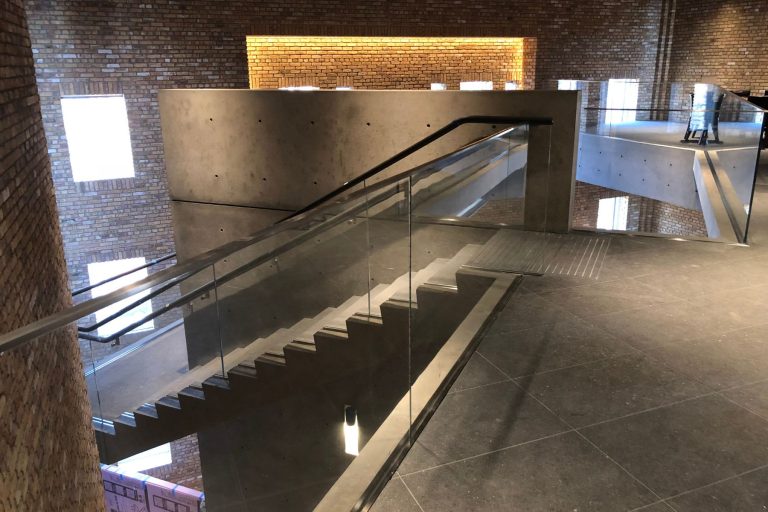
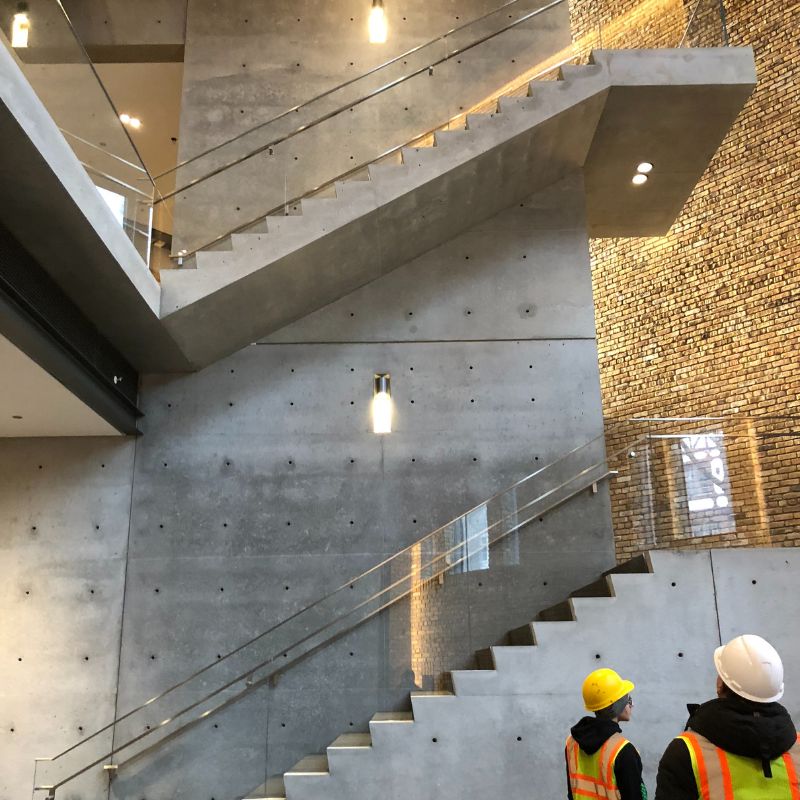
Staircases presented a particular point of focus. The floating stair flights and
landings are among the most dramatic architectural gestures in the building. The
interplay between concrete mass and open volume is delicate. Any surface
disruption here—especially along the intersection between tread and wall—would
affect the perceived sharpness of the geometry. Restoration in these zones was
carried out incrementally, often revisited over multiple days to refine blending and
alignment under gallery light.

Marion Restoration approached Wrightwood 659 not as a repair job, but as an
architectural collaboration. This was not a historic building in the conventional
sense, but its design significance required the same sensitivity and respect. Our
work wasn’t about fixing broken material—it was about restoring clarity, restoring
silence, and allowing the architecture to speak as it was meant to.
What this project reveals is a broader truth: as contemporary buildings
increasingly use exposed materials as finished surfaces, the divide between
construction and conservation begins to blur. When the surface is the
architecture, and when every visible inch contributes to the spatial experience,
traditional margins of error no longer apply. New buildings, in these cases, need
old-world craft. They need teams who can work not just with hands and tools, but
with eyes and judgment—and with an understanding of the architectural
language they are helping to uphold.
At Wrightwood 659, the role of Marion Restoration was not to make things look
better. It was to make the architecture whole.